
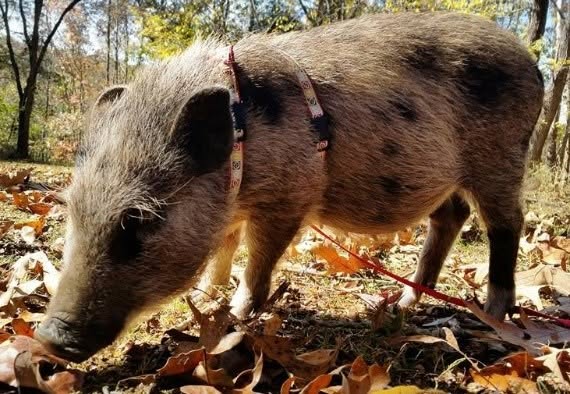
What is a Juliana Mini Pig?
Juliana Pig Breed Education

The Juliana Breed
The Juliana Breed was developed in Europe during the late 1900’s alongside the development of the Gottenheim Mini Pig. Often called the “Miniature Painted Pig” for its dazzling spotted coat; the Juliana Pig is one of the most unique but rare mini breeds in the States.
Today you see the breed’s name often marketed on Potbelly Mixes. Unfortunately having become a marketing term for “small pig” by many sellers. Despite this occurring, Juliana Pigs are actually quite a rare breed. Julianas have a documented registry, breed standard, and have very different physical characteristics than traditional and common mini pigs.
Juliana Pig Structure
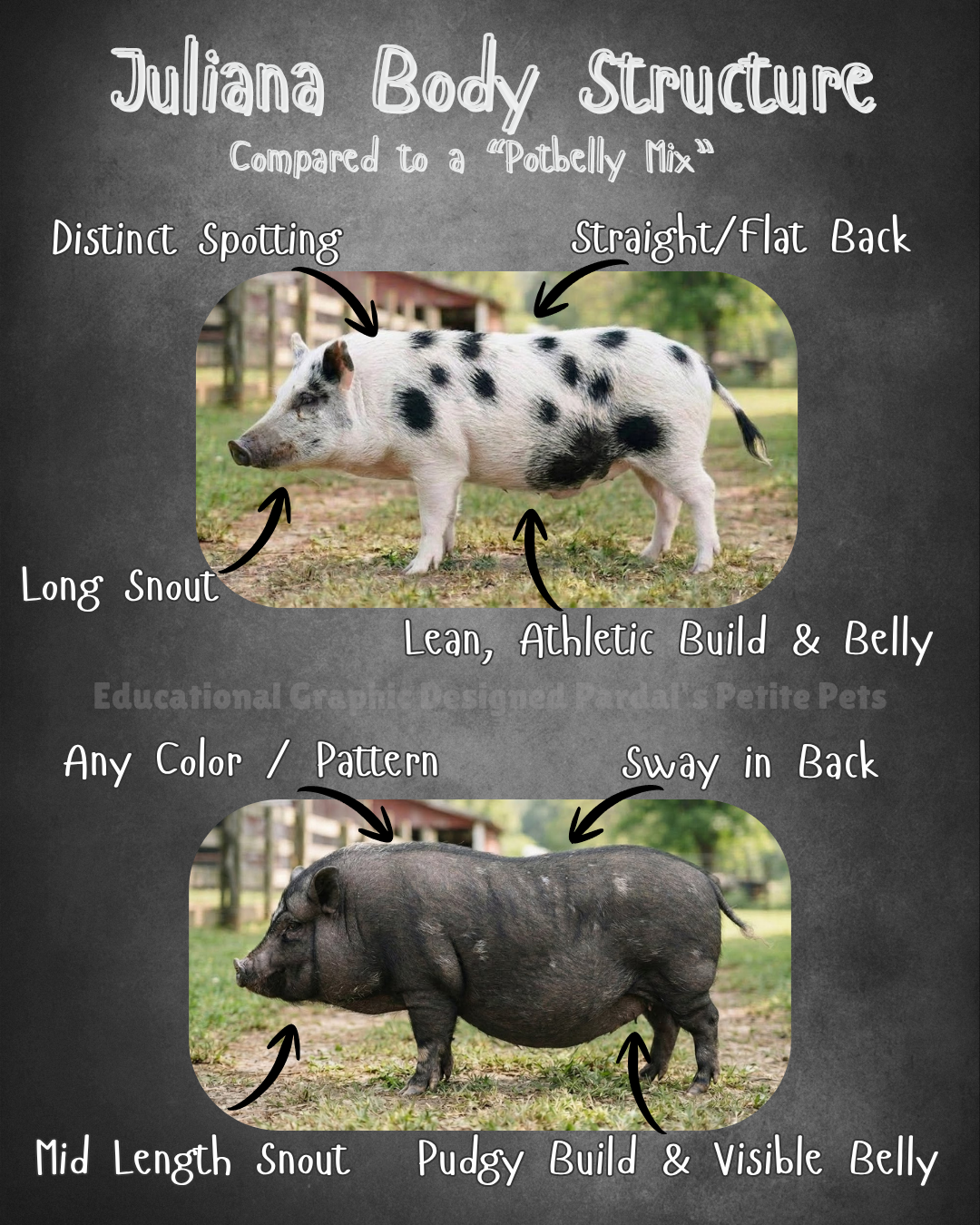
A Juliana’s Structure is one of the biggest tells between a Pure or Non-Juliana. Their Structure is very different from every other mini breed, and is something that is commonly overlooked.
Julianas will have a “sporty” look to them, with a more muscular, lean build compared to a traditional Potbelly Mix or Kune Kune.
Their backs are noticeably straight/flat; they only show a mild belly; their snouts are long and flat; and of course, they sport their distinctive spotted markings.
For more characteristics and details of the breed standard, check out JulianaPig.com
Juliana Pig Size
Many People typically look up “what’s the smallest pig breed” wanting the “tiniest” “micro/teacup/nano” etc pig. Those people tend to land on Juliana as “the smallest breed” and then become determined to get one. Without doing ANY further research…but here is the reality…
Juliana Pigs can be some of the smallest pigs, but a small size on a random pig doesn’t mean it’s a Juliana. Nor does a Juliana mean it will be the smallest possible pig.
Juliana’s are typically 15-19″ tall, most Potbellys and American Minis will also overlap that size range, with a typical height of 15-20″. So don’t be too quick to jump on the Juliana train just because of size; Consider a Potbelly Mix or American Mini, which can come in more colors and patterns.
Read More About Realistic Sizes and get Visuals on our Mini Pig Realistic Sizes Page
Juliana Pig Color
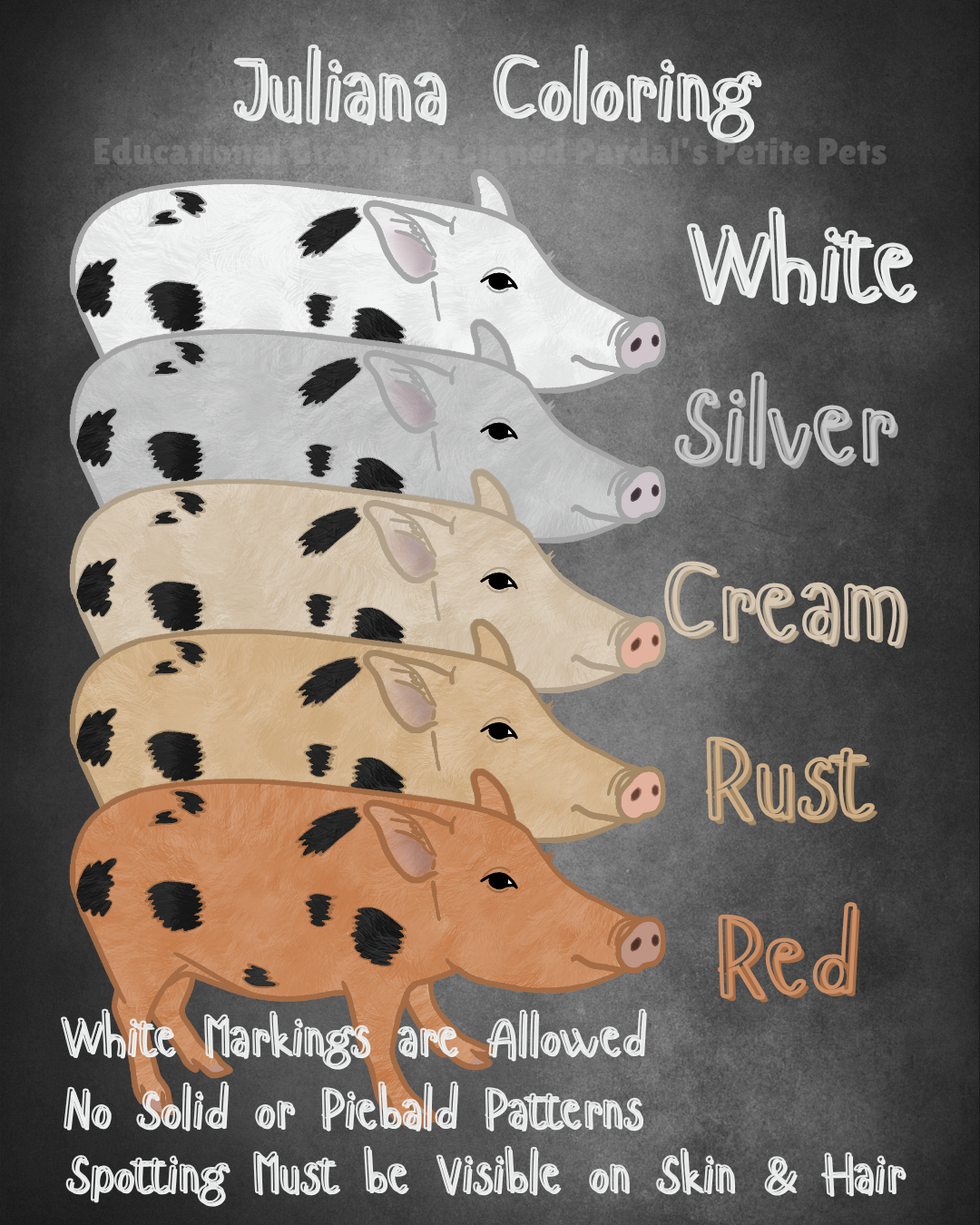
A Juliana’s Coloring is actually more flexible than most people would think. Despite the fact that most Juliana’s seen today sport a white or silver base; Juliana’s can also come in Cream, Rust, or Red base color.
White Markings are common and allowed. However, it’s important to note that Piebald markings that resemble spots are not accepted. (As it is not the correct gene and does not breed true.)
Real Life Color does not perfectly match the image. Colors can vary due to modifiers as well.
Juliana Pig Pattern
Juliana Pigs aka the “Miniature Painted Pig” Get their nickname from their distinctive spots. This unique mutation at the MC1R gene, is among the defining traits of the breed.
Because of how this specific gene behaves, a Pure Juliana will always breed true (spots) with another Pure Juliana. The more dominant color traits (solid or traditional agouti) will never be produced within the breed, unless it is outcrossed. It’s important to note that the spotting must be clearly visible on both the skin AND hair. Spotting should be plentiful and scattered, with a lack of spotting resulting in disqualification.
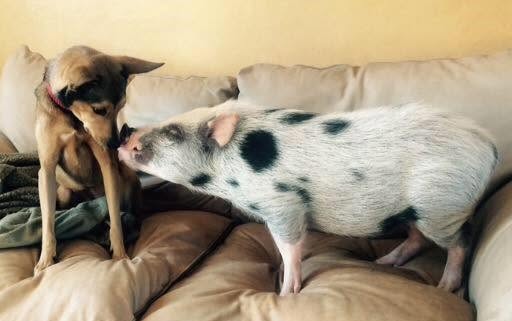
Want a Real Juliana Pig?
Check out the Juliana Pig Association and Registry
Want an American Mini Pig?
Check out the American Mini Pig Association
American Mini Pigs are just as great as Julianas! Same Size expectations, Just More Color Options and More Variations in Structure